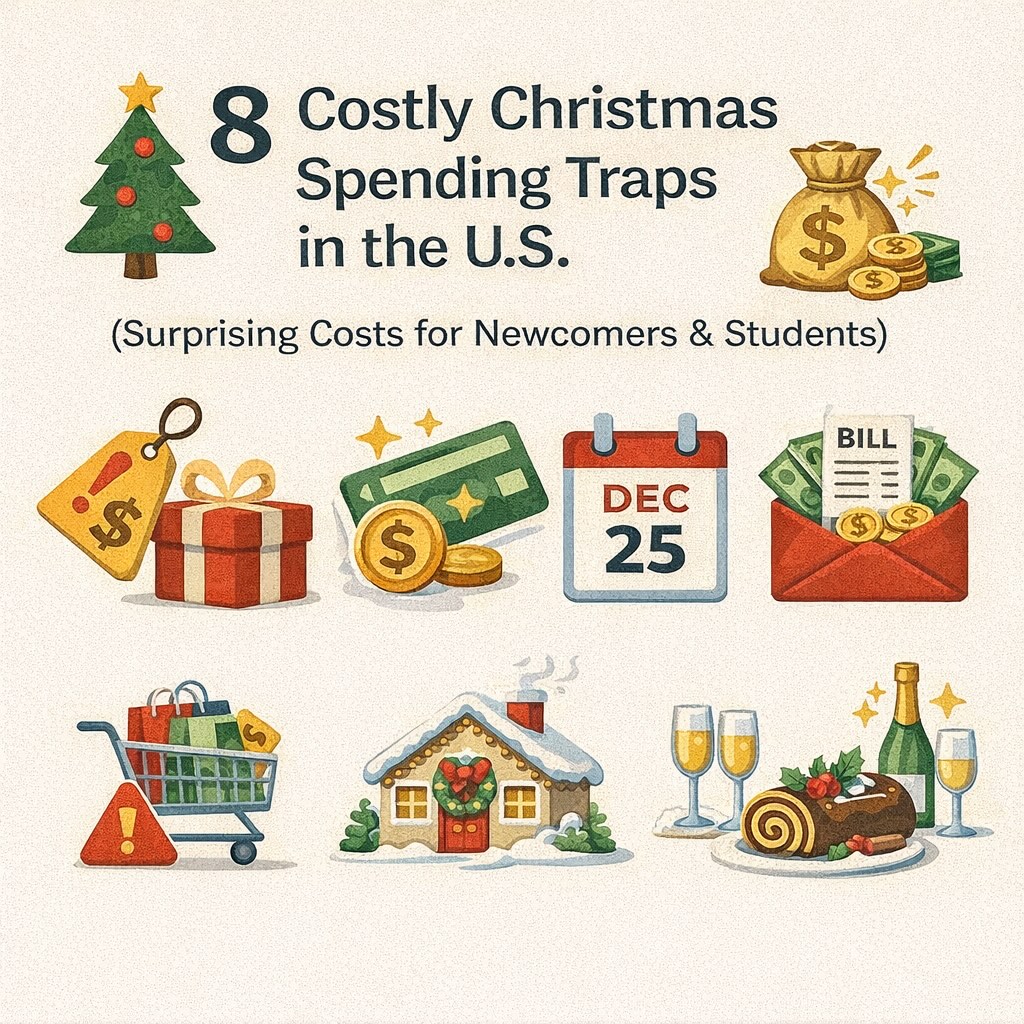
Many people spending their first Christmas in the U.S. end up feeling the same thing:
"Why did everything suddenly get so expensive?"
"I didn't splurge, so where did my money go?"
The problem usually isn't that you lost control of your spending,
but that you stepped into some "hidden markups that only show up at Christmas".
This post rounds up
the 8 kinds of spending that most easily make international students and new immigrants quietly spend more during Christmas in the U.S.
It's not about skipping the holidays,
it's about knowing where to be careful and what you can actually avoid.
🚨 1️⃣ Uber / Lyft during the holidays (the most underestimated)
Rideshare fares around Christmas
aren't "a little more expensive." Instead:
-
Surge pricing is constant
-
Even short trips can cost 2–3 times as much
-
Prices go completely out of control when it snows or rains
👉 Many people "just take one ride," and that one ride costs $40–60.
How to avoid it:
-
Leave early
-
Take the bus when you can
-
Check the price before deciding how to get home from a party
🚗 2️⃣ Parking fees + parking tickets (new immigrants fall for this most)
During Christmas:
-
Downtown parking restrictions change
-
Street cleaning schedules shift
-
More temporary No Parking signs go up
👉 Many people assume "it's a holiday, so it should be fine," and end up with a ticket.
How to avoid it:
-
Always take a photo before you park
-
Check the city holiday parking rules
-
If you're not sure, use a paid lot
🎁 3️⃣ The "emotional markup" on Christmas gifts
This one hurts the most.
-
Something that normally costs $25
-
becomes $40 by 12/20
-
and the store says "only a few left"
👉 You're not paying for the product; you're paying for the "anxiety of running out of time."
How to avoid it:
-
Get it done before 12/15
-
Or just give gifts after the holidays (Americans are actually fine with that)
📦 4️⃣ Postage and shipping fees (very unfriendly)
Before Christmas:
-
USPS / FedEx / UPS are completely swamped
-
No compensation for late delivery
-
Expedited shipping fees skyrocket
👉 Many people pay an extra $30–70 for a single package.
How to avoid it:
-
Send e-gifts whenever you can
-
Don't trust "guaranteed delivery"
-
Shipping early is the only fix
🍽️ 5️⃣ Holiday dining out and tips (the bill is bigger than you think)
During Christmas:
-
Restaurants often add a mandatory gratuity
-
Holiday menus cost more
-
Tax + tip stack up
👉 A $120 meal for two turning into $160 at checkout is very common.
How to avoid it:
-
Check whether the bill already includes gratuity
-
Make more of your get-togethers home gatherings
-
Costco / Trader Joe’s actually works out cheaper
🏨 6️⃣ Holiday lodging add-on fees (it's not just the room rate)
The Christmas lodging trap usually isn't the "room rate."
It's:
-
Resort fee
-
Minimum stay
-
Mandatory holiday packages
-
Non-cancellation terms
👉 Many people think they booked a cheap room, but the total ends up 30% higher.
How to avoid it:
-
Always check the total price before you pay
-
Avoid anything labeled "Holiday Package"
-
Staying before or after the holidays is safest
🚿 7️⃣ Winter utility bills (the biggest shock for first-year arrivals)
Many new immigrants are startled the first time they get their December bills.
Why:
-
The heater runs for long hours
-
Short days mean more lighting
-
Water use goes up
👉 A bill that's suddenly $50–150 higher is very common.
How to avoid it:
-
Turn down the thermostat
-
Use timed heating
-
Watch for peak hour electricity rates
💳 8️⃣ Credit card interest and late fees (the least painful but the most expensive)
Card spending surges at Christmas,
but many people overlook:
-
The minimum payment due
-
Interest starting to accrue
-
A 0% APR about to expire
👉 If you don't sort it out, interest will slowly eat you up next year.
How to avoid it:
-
First thing after the holidays: sort out your card bills
-
If you're not sure, pay a bit extra first
-
Watch the promotional APR expiration date
🧭 Final thoughts: the most expensive part of Christmas isn't the gifts; it's "not knowing the rules"
With Christmas in the U.S.,
the traps aren't hidden in luxury goods,
they're hidden in transportation, bills, time pressure and holiday emotions.
Knowing this doesn't mean you can't enjoy the holidays;
it means you won't be shocked when the bills arrive in January.
Saving money isn't about holding back; it's about knowing what others don't.