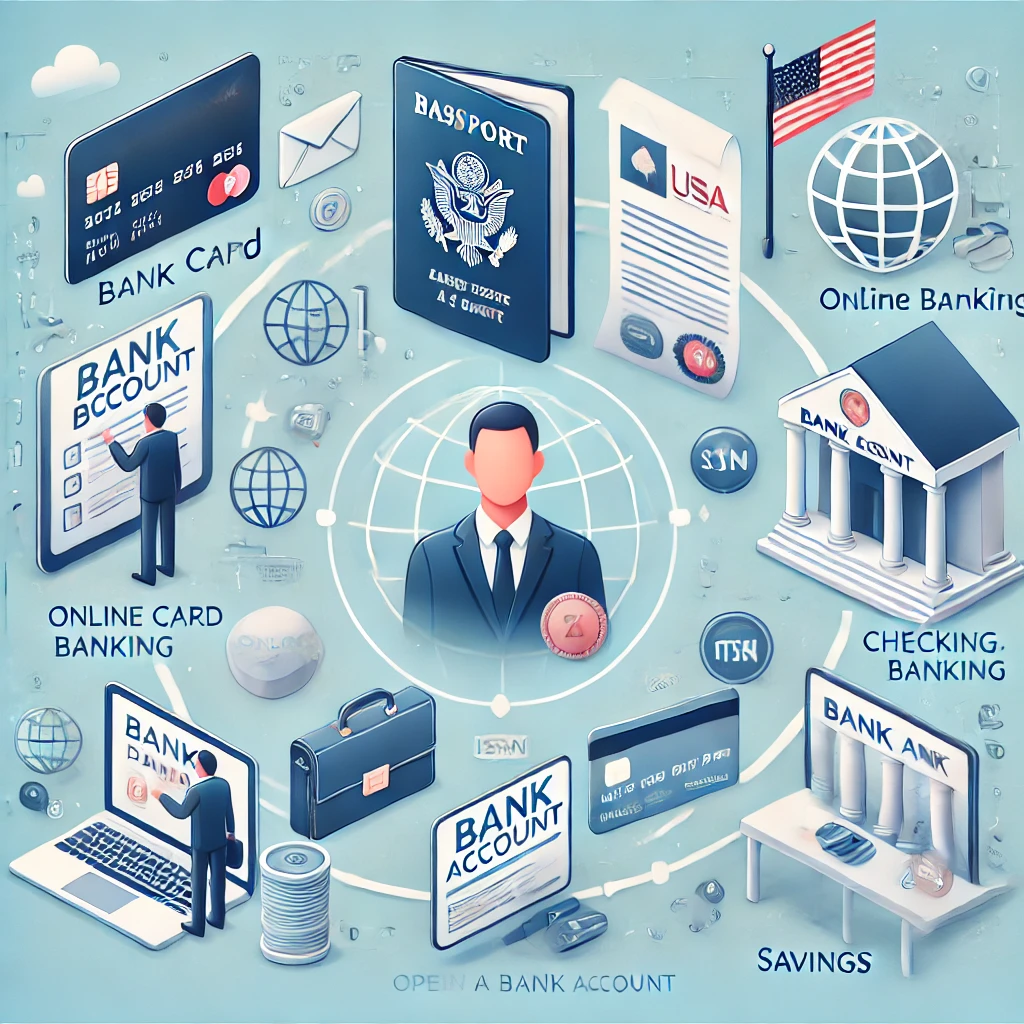
Once you settle in the U.S., opening a bank account is the first step for every new immigrant. Whether you're saving money, paying everyday bills or getting your paycheck, a bank account is a basic need. This article explains in detail how to choose a bank in the U.S., how to open an account, and the bank fees and other points to keep in mind when choosing.
How to Choose a Bank
In the U.S., many banks offer a range of account options. The most common banks include:
- Chase (JPMorgan Chase)
Chase offers a wide range of accounts and has a huge number of branches and ATMs nationwide, which suits customers who withdraw cash often.
Chase official website*I only use Chase right now, so I'm very biased. Here's a link that gets you a $300 bonus when you open an account 😂😂
. - Bank of America
It offers many types of accounts, and managing your account is fairly simple for newly arrived immigrants.
Bank of America official website - Wells Fargo
Wells Fargo is one of the major banks in the U.S. and offers many types of accounts and financial products.
Wells Fargo official website - Citibank
Citibank offers global services and suits immigrants who need international transfers or have global business needs.
Citibank official website
The Basic Steps to Open a Bank Account
- Choose an account type
Pick an account type based on your needs:- Checking account (Checking Account): mainly for everyday payments, withdrawals and so on.
- Savings account (Savings Account): for keeping your money, usually with some interest.
- High-yield savings account (High Yield Savings Account): a higher interest rate, but usually requires a certain balance.
- Prepare the documents you need Opening an account usually requires:
- A valid passport (Passport): if you're a foreign national, your passport serves as your ID.
- Proof of a U.S. address (such as a utility bill or lease)
- A Social Security number (Social Security Number, SSN) or an individual taxpayer identification number (ITIN)
- An opening deposit: depending on the bank, a minimum deposit may be required.
- Open the account in person or online
Many banks let you open an account online, but some may require you to visit a branch in person to verify your identity the first time. - Set up online banking
Most banks offer online banking (Online Banking) so you can manage your account anytime, anywhere, check your transactions or make transfers.
Fees and Things to Watch
- Monthly fees (Monthly Maintenance Fees)
Many banks charge a monthly fee on accounts, but it's usually waived if you keep a minimum balance or meet certain conditions (such as automatic transfers). - ATM fees (ATM Fees)
If you withdraw cash from an ATM that doesn't belong to your bank, you'll usually pay a fee. Choosing a bank that offers free ATM withdrawals will help. - Overdraft fees (Overdraft Fees)
If your account doesn't have enough money to cover a charge, the bank will charge an overdraft fee. To avoid this, always keep an eye on your balance.
Tips for Choosing a Bank
- Compare each bank's promotions: many banks offer cash bonuses or fee waivers for new customers, which is very helpful for newly arrived immigrants.
- Choose a bank that makes cash easy to get: if you withdraw cash often, a bank with lots of branches and ATMs where you live will be more convenient.
- Understand the fee structure: choosing a bank with clear, reasonable fees can cut down on extra everyday costs.
Final thoughts
Opening a bank account is a very important step in the U.S. It helps you manage everyday spending, keep your money safe and make all kinds of transactions. Choosing the right bank and account type, and understanding the bank's fee structure, will make your daily life much easier.