Home Internet for Newcomers: How to Choose Between Fiber, Cable and 5G Home Internet
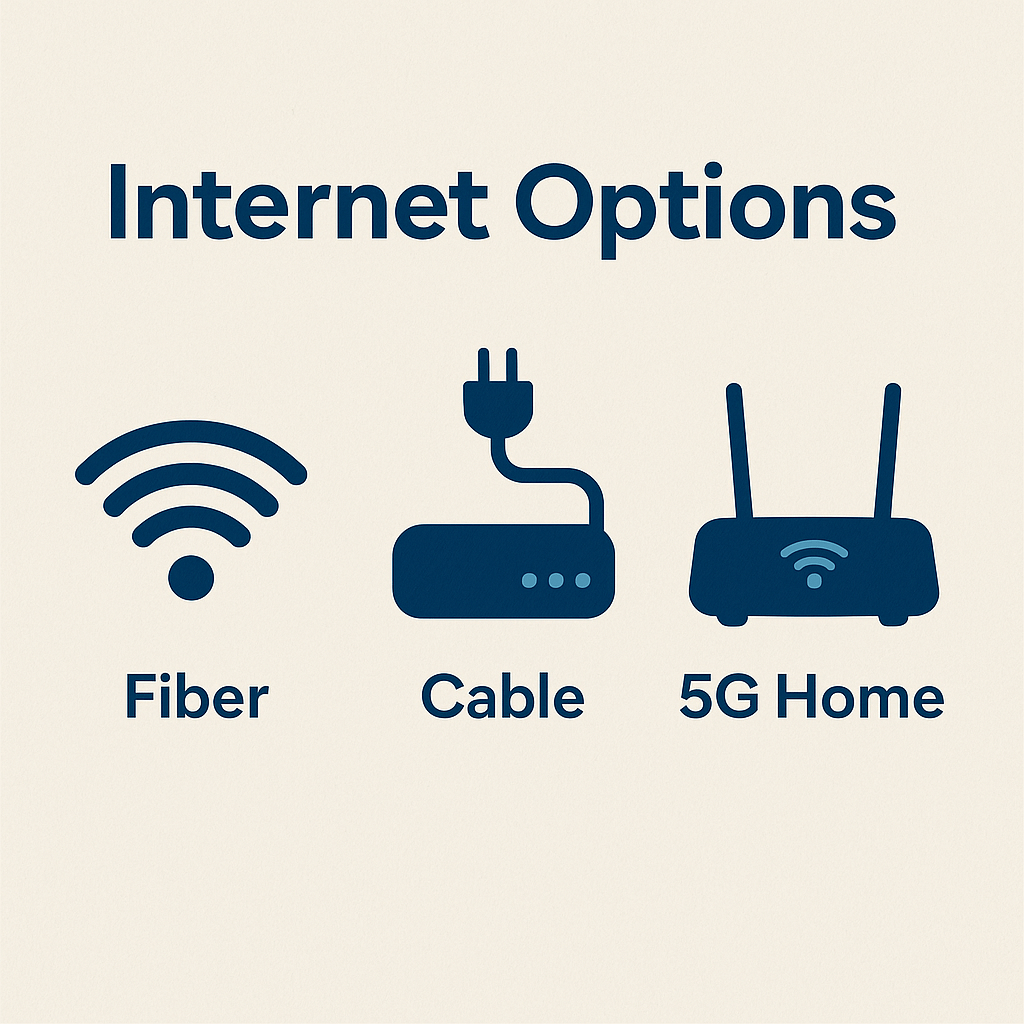
When you first move to the U.S., the first thing to sort out after a place to live is the internet. Whether it's work, streaming shows, gaming or video calls with family back home, you need an internet plan that's stable, fast and within your budget. In the U.S., there are three main options for home internet: Fiber (Fiber), cable (Cable) and 5G Home Internet.
📌 Fiber (Fiber Internet)
Fiber is currently the fastest and most stable option.
Pros: symmetrical upload and download speeds with very low latency, ideal for remote work, online meetings, 4K/8K streaming and gaming.
Cons: only about 40% of households can get it, and it costs more.
Best for: people who work from home, online gamers and video creators.
👉 Go to highspeedinternet.com to check whether fiber service is available where you live.
📌 Cable (Cable Internet)
Cable is the most widely available home internet option in the U.S.
Pros: fast download speeds, and installation is usually easy.
Cons: upload speeds are generally lower than fiber, and speeds can drop at peak times because bandwidth is shared.
Best for: typical internet users and home entertainment (Netflix, YouTube).
👉 Use swiftspeedtest.com to test your speed and see whether it meets your needs.
📌 5G Home Internet
As 5G has spread, many carriers have launched wireless home internet service.
Pros: no wiring and easy setup; the monthly fee is usually cheaper than fiber, which suits renters and people on a tight budget.
Cons: speed and stability depend on the signal from the cell tower and are easily affected by weather or your surroundings.
Best for: people living somewhere temporarily, students and users who don't go online much.
👉 Common providers: T-Mobile, Verizon, AT&T.
📌 Tips before you choose a plan
Check availability: the plans available vary a lot by area, so first check which services are available at your home address.
Compare prices and contracts: watch for installation fees, contract length (12–24 months) and any promotions.
Test the speed: use Speedtest or Fast.com to check actual performance.
Choose by need:
Remote work & gaming 🎮 👉 Fiber
General household use 📺 👉 Cable
Renting & on a tight budget 🏠 👉 5G Home Internet
📌 Bottom line
For new immigrants, fiber is the best choice, but it isn't available everywhere. If fiber isn't available, cable is the most common option, and 5G Home Internet is a flexible, low-cost alternative. Choose the plan that fits best based on what's available where you live, your work needs and your budget, so that life and work in the U.S. both go more smoothly.
I'm C. I'm from Taiwan and now run a business in Los Angeles. When I first arrived, the challenges were everywhere! From the language barrier to culture shock, every small detail took me a long time to figure out. Those experiences taught me how to adapt quickly here, until I was in my element. I've put years of that experience on this site to help newcomers like me settle into life in the U.S. more easily and quickly. Whether it's moving here, finding a job or handling everyday tasks, you'll find plenty of practical shortcuts and solutions so you can skip the detours. I hope what I share helps you start your new life in America smoothly, with less effort and a lot more fun!