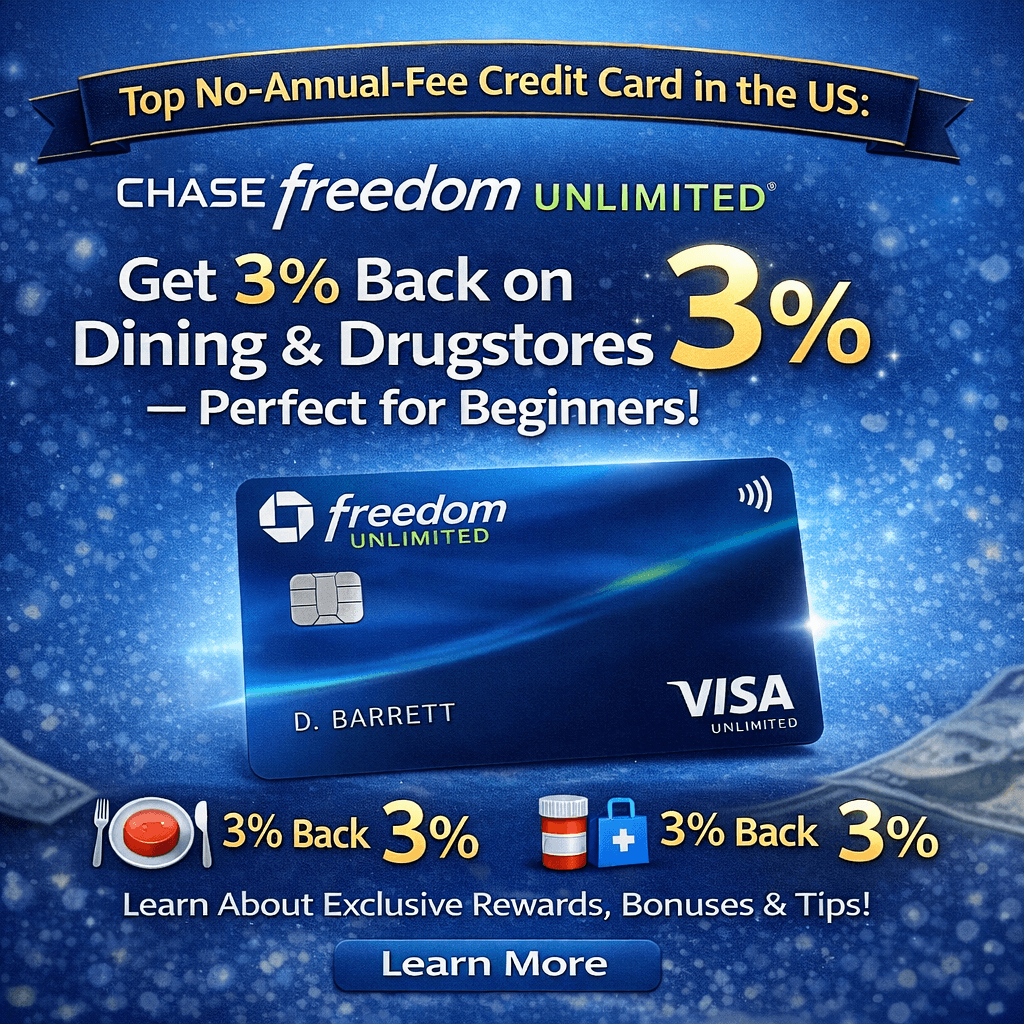

[2026 Must-Read] The Complete Guide to the Chase Freedom Unlimited Card: Beyond 1.5% Back on Everything, What Hidden Perks Does It Have?
If you live in the U.S. and could keep only one no-annual-fee "fallback card" in your wallet, most people would pick Chase Freedom Unlimited (CFU for short).
Unlike cards whose bonus categories rotate by season (such as Freedom Flex), what defines the CFU is stability and broad coverage. Whether you just got your SSN and want to get into the Chase ecosystem, or you're a veteran with lots of cards, this is an essential "everyday workhorse" card.
1. 2026 welcome offer (Welcome Offer)
-
The offer: Spend $500 within 3 months of approval and get $200 (20,000 points) back.
-
How hard is it to earn: Very easy! For new immigrants, one big grocery run or an insurance payment gets you there.
-
Extra perk: It usually also comes with 15 months of 0% APR on purchases (no interest on purchases). With interest rates high in 2026, that's very attractive if you have big expenses coming up (like buying furniture after a move).
2. Rewards rates: why is it called "Unlimited"?
The card is called a "do-it-all" card because it earns above-average rewards on all spending outside specific categories:
-
All other purchases (All Other Purchases): 1.5%
-
This is its core value. While other cards give just 1% on car repairs, utility bills, doctor visits and haircuts, the CFU always gives you 1.5%.
-
-
Dining: 3%
-
Includes restaurants across the U.S., takeout and delivery apps (such as UberEats, DoorDash).
-
-
Drugstores: 3%
-
Great value for vitamins and everyday items at CVS and Walgreens.
-
-
Chase Travel: 5%
-
Book flights, hotels and rental cars through Chase's website for very high rewards.
-
3. Next level: turning cash back into free flights
The CFU looks like a "cash back card," but what it actually earns is Chase Ultimate Rewards (UR) points.
-
If the CFU is your only Chase card, 1 point = 1 cent.
-
Pro strategy: If you also have Chase Sapphire Preferred (CSP) or Reserve (CSR), you can move the points you earn on the CFU over to that card, then transfer them to United Airlines (United) or Hyatt hotels (Hyatt), and the value jumps to 1.6 – 2.0 cents or more per point! That's the famous "Chase Trifecta" strategy.
4. Editor's review: read this before you apply
Who should apply:
-
People who want it simple: You don't want to rack your brain over which card to use when; the CFU's 1.5% is the safest baseline.
-
People who care about warranty protection: Unusually for a no-annual-fee card, it offers Purchase Protection and Extended Warranty; use this card when you buy an iPhone or appliances.
-
People who want a relationship with Chase: Chase is a bank that cares a lot about "relationships." Holding the CFU and paying on time can greatly improve your odds when you later apply for premium cards (such as the Sapphire).
Things to watch for (new immigrants, read this):
-
Chase 5/24 rule: If you've opened more than 5 credit cards in the U.S. in the past 24 months (from any bank), Chase will usually just deny you. Put this card near the top of your application order.
-
Credit history requirement: It's best to have at least 1 year of credit history before you apply. If you're new, you can open a Chase bank account first and deposit some money to show good faith.
-
Foreign transaction fee: This card has a 3% foreign transaction fee (FTF), so never use it on trips back to Taiwan or abroad.
5. Summary
Chase Freedom Unlimited is a card with "a high floor and a very high ceiling." On its own, it's the best everyday spending card; paired with a premium card, it's the strongest helper for earning free travel.