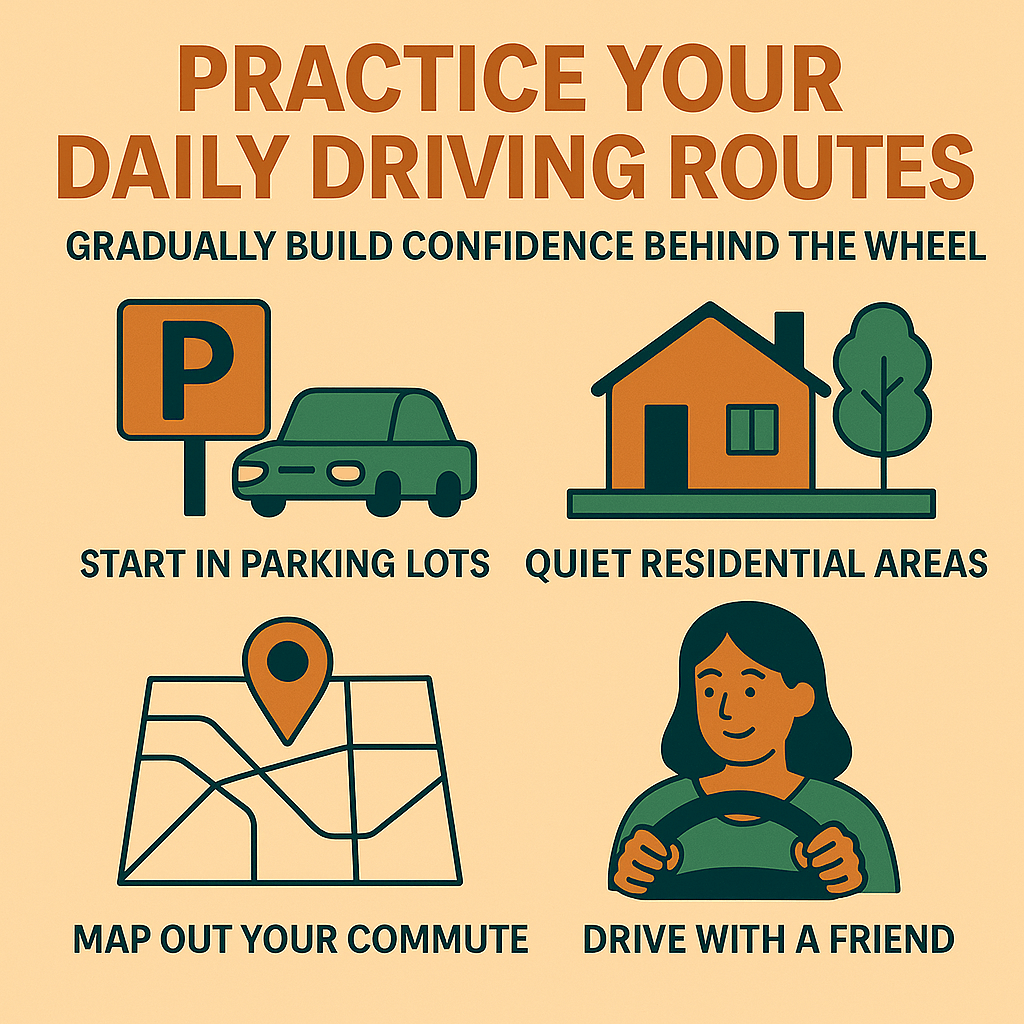
A Must-Read for New Drivers: How to Practice Everyday Driving Routes and Build Confidence Step by Step
Getting your driver's license is only the first step. The real challenge is driving safely in all kinds of road conditions. If you're just starting to drive in the U.S., step-by-step practice helps you get comfortable handling the car and gradually build your confidence behind the wheel. Here is a practical way to practice everyday routes so you can adjust to life as a driver faster.
Practice starting, braking, steering and backing up again and again.
Once you know how the car responds, move on to parking in a space, backing into a spot and similar maneuvers.
💡 Getting to know the car in a low-pressure setting is the first step toward feeling safe.
📌 Step 2: Residential streets
Once you've got the basics down, move on to residential areas with less traffic:
Focus on keeping a steady speed.
Practice watching for pedestrians at intersections, parked cars and flashing signals.
Build the habit of reading the road ahead instead of reacting at the last moment.
👉 AAA's advice: don't drive the same road every time. Changing routes now and then improves how well you handle the unexpected.
📌 Step 3: Take on different road conditions
Gradually try different times and conditions:
Time: daytime, nighttime, rush hour and off-peak hours.
Weather: rain, thick fog, even light snow.
Roads: city streets, country roads, suburban roads and freeways.
💡 Rules for freeway driving:
Keep a 3–4 second safe following distance from the car ahead; add 1 more second at night or in the rain.
Keep at least one lane of space to your side so you don't get "boxed in."
Look 12–15 seconds ahead and anticipate possible hazards at all times.
📌 Step 4: Plan your daily commute
Use Google Maps or Waze to plan the best route.
Get familiar with it first at off-peak times.
Pay attention to parking lot entrances and exits, traffic light cycles and speed limits.
Leave extra time so you don't get stressed from rushing.
If you need to, ask an experienced friend or family member to ride along.
📌 Step 5: Make a habit of reviewing your drives
After each practice drive, jot down:
How long you drove, the route and the weather.
How anxious you felt (on a 1–10 scale).
3 things you did well, and 1 thing to improve.
👉 Reflecting and building up experience helps your driving improve faster.
📌 Bottom Line
To drive safely and confidently in the U.S., how you practice matters more than how fast you progress:
🚗 Start in a parking lot → get a feel for the controls.
🏠 Move to residential streets → build the habit of watching the road and controlling your speed.
🌧️ Take on different conditions → get better at handling things on the spot.
🛣️ Plan your daily routes → get to know the way to school, work and the grocery store.
📒 Reflect and keep notes → keep refining your driving.
With step-by-step practice, you'll find your confidence growing until you can handle all kinds of road conditions calmly.
I'm C. I'm from Taiwan and now run a business in Los Angeles. When I first arrived, the challenges were everywhere! From the language barrier to culture shock, every small detail took me a long time to figure out. Those experiences taught me how to adapt quickly here, until I was in my element. I've put years of that experience on this site to help newcomers like me settle into life in the U.S. more easily and quickly. Whether it's moving here, finding a job or handling everyday tasks, you'll find plenty of practical shortcuts and solutions so you can skip the detours. I hope what I share helps you start your new life in America smoothly, with less effort and a lot more fun!