Safety Essentials for New Immigrants: Know 911, 211, 988, 311 and Other U.S. Emergency and Help Lines
Safety Essentials for New Immigrants: Know 911, 211, 988, 311 and Other U.S. Emergency and Help Lines
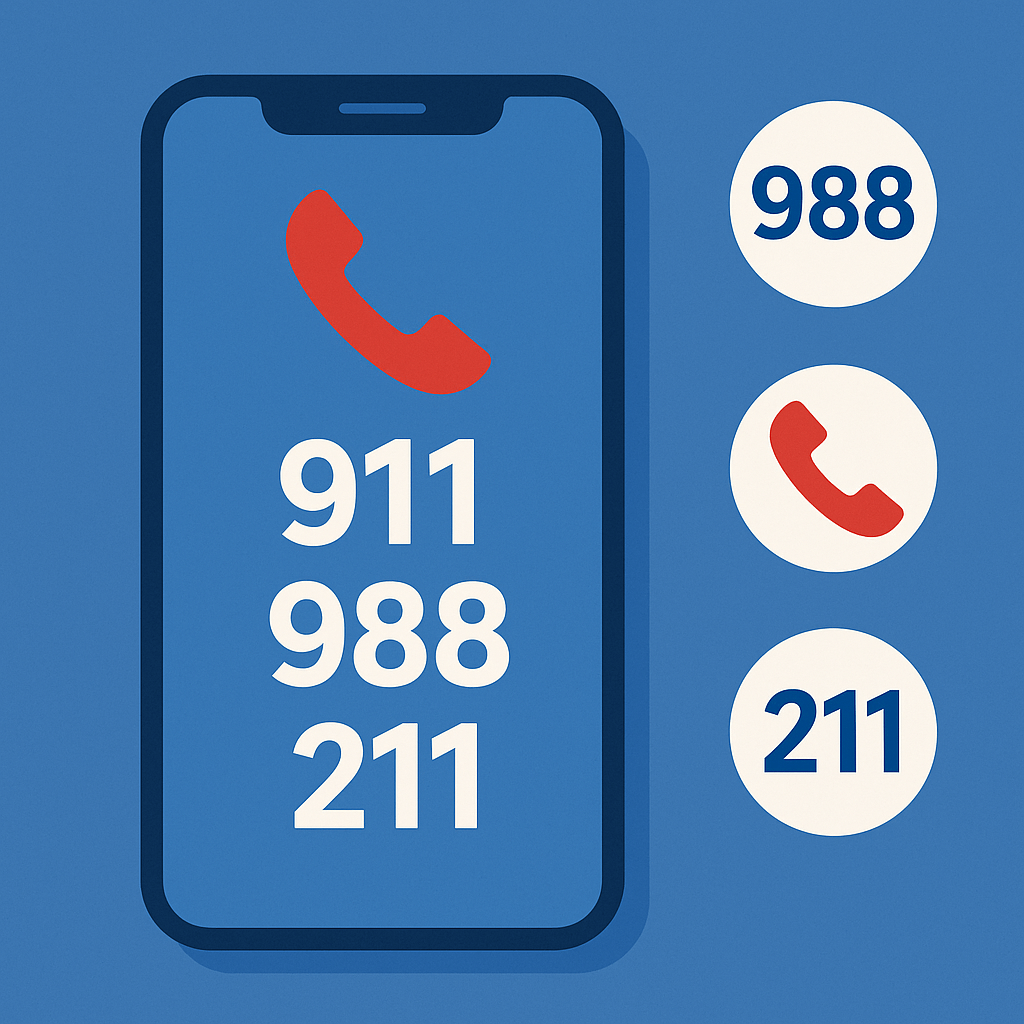
When you've just immigrated to the U.S., besides adjusting to daily life and the language, knowing the emergency and help numbers is an important part of staying safe. The U.S. has several three-digit phone services, and each number has a different purpose. Knowing and memorizing these numbers means that when you're in danger or need help, you can reach the right resource right away.
📌 911 – Emergency line
When to use it: call 911 immediately if someone's life is in danger, or if there's a fire, a serious traffic accident or a crime.
What happens: the dispatcher will ask for your location, phone number and the nature of the emergency, and give you instructions until help arrives.
Tip: if you dial by mistake, don't just hang up. Explain the situation to the dispatcher so it isn't treated as an emergency. 🔗 Reference: 911.gov
📌 211 – Community support and resource line
When to use it: connects you with local social resources and nonprofit services, provided by United Way .
Services: food banks, emergency shelter, counseling, job training, medical resources and more.
Features: available 24 hours a day, year-round, in many languages; very useful for new immigrants looking for help with daily life. 🔗 Reference: United Way 211
📌 988 – Suicide and Crisis Lifeline
When to use it: in a mental health crisis or if you're having thoughts of suicide, call or text 988 to get help right away.
Services: one-on-one conversations with professionally trained counselors, available every day of the year and completely confidential.
Other ways to reach it: you can also use online chat, or reach out on behalf of a friend or family member. 🔗 Reference: 988 Suicide & Crisis Lifeline
📌 311 – City non-emergency services
When to use it: for city-related problems that aren't emergencies, such as potholes, noise, abandoned vehicles or broken traffic signals.
How it's handled: the operator forwards your request to the relevant city department.
App support: some cities offer a 311 App, such as Los Angeles's MyLA311, which makes it easier to report and track issues online. 🔗 Reference: SafeWise – Non-Emergency Numbers
📌 Other useful lines
Besides the four main numbers above, there are other important lines in individual states and nationwide:
511: traffic information line for real-time road conditions.
1-800-222-1222: national Poison Control Center hotline for poisoning emergencies.
Your local government website: usually lists more local support resources; new immigrants should look it up as soon as they arrive.
📌 Bottom line: memorize these lines to keep yourself safe
911: life-threatening situations and major emergencies
211: community help and everyday resources
988: mental health crises and suicide prevention
311: city non-emergency problems
👉 Once you know these lines, you can quickly get the right help when you face danger or need assistance. It protects you, and it keeps your family safe too.
I'm C. I'm from Taiwan and now run a business in Los Angeles. When I first arrived, the challenges were everywhere! From the language barrier to culture shock, every small detail took me a long time to figure out. Those experiences taught me how to adapt quickly here, until I was in my element. I've put years of that experience on this site to help newcomers like me settle into life in the U.S. more easily and quickly. Whether it's moving here, finding a job or handling everyday tasks, you'll find plenty of practical shortcuts and solutions so you can skip the detours. I hope what I share helps you start your new life in America smoothly, with less effort and a lot more fun!