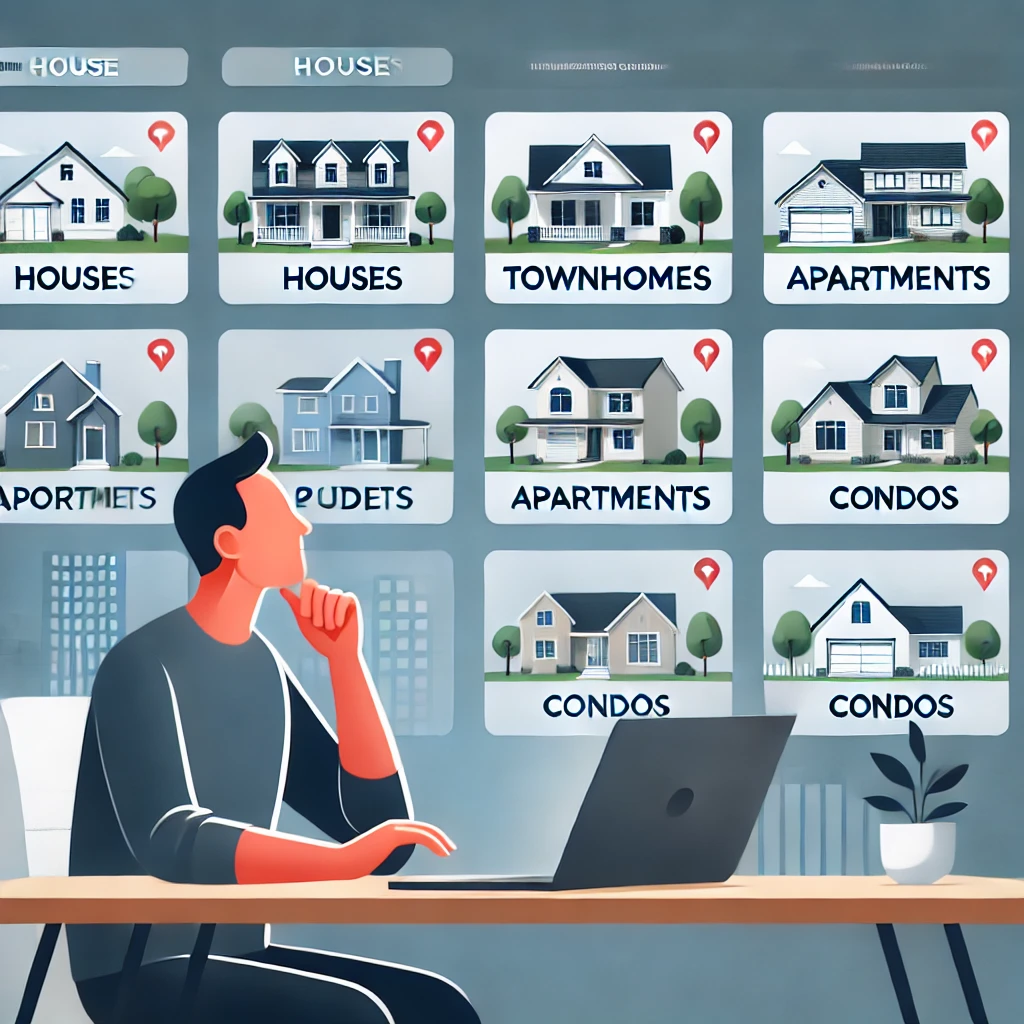
7 Common Types of Homes in the U.S.: Which One Is Right for You?
In the U.S., you have a wide range of choices when renting or buying a home. Each type of home has its own features and suits renters with different needs. If you've just arrived in the U.S. and feel confused by all the options, this article will help you understand each type more clearly and choose based on your own needs.
1. Single-family homes (Houses)
This is one of the most common types of homes in the U.S. It usually includes a living room, bedrooms, a kitchen and bathrooms. Often these homes have their own small yard, which makes them good for families. Rent for a single-family home is usually higher, but you get more privacy, so they suit families who need more space of their own or have kids.
Pros: Lots of privacy and space Cons: Rent is relatively high, and maintenance costs may be higher
2. Townhomes
Townhomes are usually small two-story homes that typically share a wall with the home next door. They cost less than single-family homes but still give you a fairly independent living space. These homes usually have a small yard or backyard, which makes them great for small families or people who want some privacy without paying the high rent of a single-family home.
Pros: Cheaper than a single-family home, with a small yard and a moderate amount of space Cons: Neighbors may be noisier, and there's relatively less privacy
3. Multi-family homes (Multi-family)
A multi-family home is a building with two or more separate units, and each unit may be a complete home. Rent for these homes is usually lower, so they suit people on a limited budget. Residents share outdoor facilities such as parking or a garden.
Pros: Relatively cheap, and you usually get access to a larger space Cons: Shared common areas and poor privacy
4. Apartments
Apartments are one of the most common ways to rent or buy. They're usually in large buildings, and each unit is a complete living space. Apartment rents are more flexible, and they often come with extra amenities such as a pool, a gym or 24-hour security.
Pros: Convenient shared amenities and easy maintenance Cons: Poor privacy, smaller spaces, and rent can sometimes be high
5. Condos/Co-ops
These homes are usually privately owned, but share building facilities with other units. In the rental market, condos and co-ops differ somewhat; co-ops usually have special purchase rules. These homes are relatively quiet and are a good fit for renters who live on their own.
Pros: Well-equipped, and usually in convenient locations Cons: You may have to pay high management fees
6. Lots/Land
This means renting only the land. The renter can build their own home on it or use it for farming or other purposes. This option is fairly rare, and most people choose to buy rather than rent.
Pros: A lot of freedom Cons: You have to build the home or business facilities yourself
7. Manufactured homes (Manufactured)
A manufactured home, also called a mobile home, is built in a factory and transported to a chosen site. These homes are usually cheaper than traditionally built homes but may come with higher maintenance costs. Manufactured homes are often found in some resorts or mobile home communities.
Pros: Cheap and easy to install Cons: Limited space, and maintenance costs may be higher
How do you choose the right type of home?
Which type of home you choose depends on your budget, your needs and your lifestyle. If you have kids, you might choose a single-family home with a yard; if you're a young professional, an apartment or a townhome may be the better choice. Knowing the pros and cons of each type of home helps you make a smart decision.
Whichever type of home you choose, remember to decide based on your needs. I hope this article helps you better understand the different housing options so you can find a home that fits your needs more easily.
How do you choose the right type of home? (Whether you're renting or buying)
Choosing the type of home that's right for you isn't just about your budget or needs. There are many other factors to consider, and when you've just arrived in the U.S., this can be a real headache. Whether you're renting or buying, knowing the pros and cons of the different types of homes will help you make the choice that best fits your needs.
1. Budget and lifestyle:
First, be clear about your budget. Your budget directly affects which types of homes you can choose. For example, single-family homes (Houses) are usually one of the most expensive options and suit people with families who want private space, while apartments (Apartments) are relatively cheap and suit singles or small families. If your budget is limited, a more affordable townhome (Townhomes) or multi-family home (Multi-family) is a good choice.
2. Space needs:
Knowing how much living space you need helps you choose. Single-family homes usually offer more space and a yard, which makes them good for families. If you live simply or on your own, consider a small apartment, a studio (Studio) or a one-bedroom, one-bath (1B1B) apartment. These are smaller but have enough space for everyday life. For renters who are still figuring out what they need, a multi-family home or townhome with some shared space may give the best value for money.
3. Convenience:
If you're a busy working professional, a location close to work with easy transportation may matter more than space. For example, if you work near downtown, living in an apartment with good transit access or in a community with good shared amenities (such as a gym or a pool) is a better choice.
4. Privacy and social needs:
If you prefer a private, quiet lifestyle, a single-family home is the best choice because it gives you the most private space and you don't share walls with other residents. Apartments and multi-family homes, on the other hand, may have you sharing more common facilities with your neighbors, which some people may find inconvenient.
5. Facilities and maintenance:
When choosing a home, you also need to think about maintenance. Apartments and co-ops (Condos) usually have community maintenance fees, which may cover upkeep and maintenance of the common areas. But if you choose a single-family home, you're usually responsible for all the maintenance yourself. If you don't want to deal with a lot of repairs, an apartment or co-op with facilities and maintenance taken care of is the easy choice.
6. Future plans and stability:
If you plan to settle in the U.S. for the long term, buying a home (such as a single-family home or a townhome) is a good choice. Buying a home gives you more stability and lets you gradually build your credit in the U.S. However, if you're only here for a short-term job or study, renting an apartment or a multi-family home gives you more flexibility, and you won't have to worry about selling or maintaining it later.