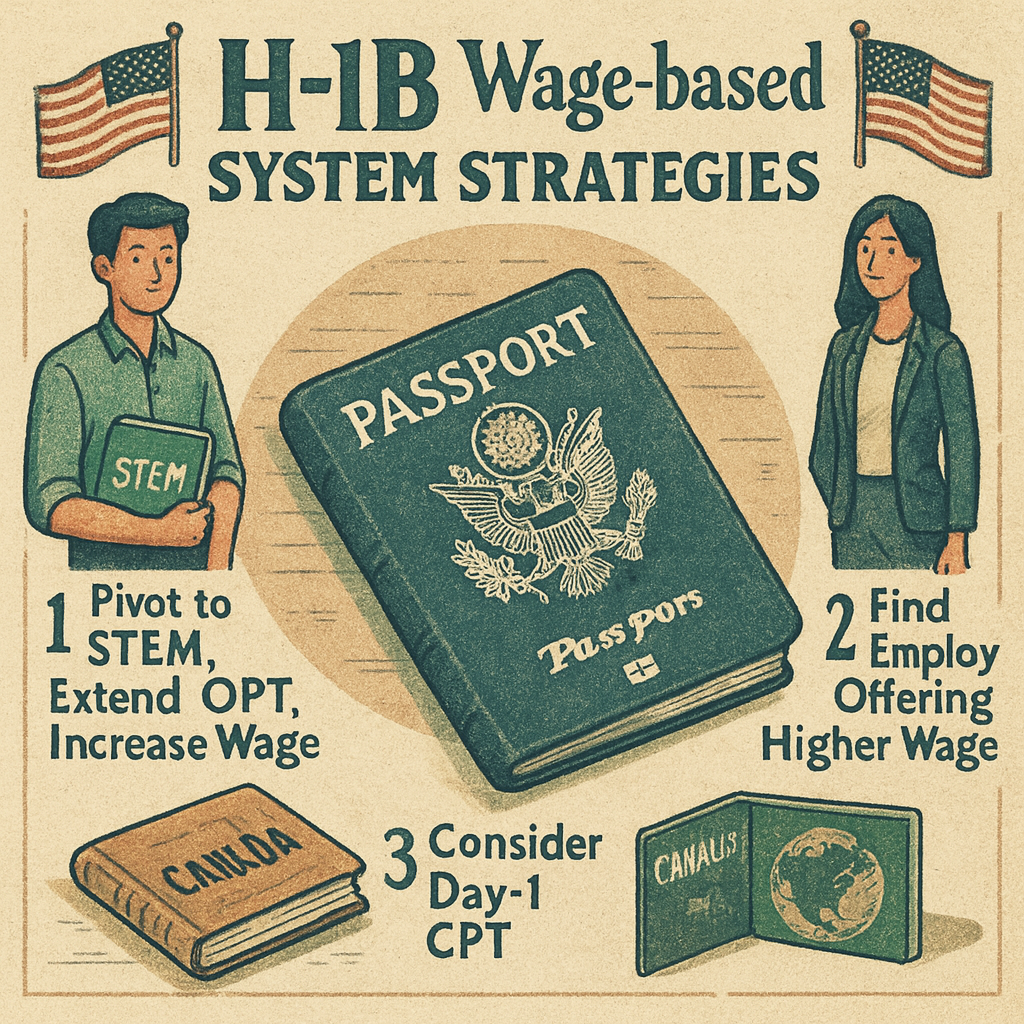
Starting in 2026, the U.S. H-1B lottery may become history, replaced by a new “higher pay first” (Wage-based selection) system! As soon as the news broke, many international students and new graduates panicked. Before, you could at least count on luck. Now even the lottery is gone. Does a low salary mean you’re simply out?
Hang on~ This article doesn’t just explain how the new system is expected to work. It also lays out a set of practical strategies to get around the limits, so you still have a shot at an H-1B visa!
🔍 What is wage-based selection?
Simply put, H-1B slots used to be handed out by a computerized random draw (Lottery system), so everyone had an equal chance. But under the latest 2025 proposal, starting in 2026 the H-1B will switch to “salary ranking”: higher earners go first, and people at the low-to-middle wage levels (Wage Level 1-2) will be very unlikely to be selected!
What does this mean? New graduates, those of you in assistant roles, and NGO workers will be at a serious disadvantage.
🎯 So what can you do? Take notes on these strategies!
✅ 1. Move into STEM to extend your OPT and raise your starting salary
If you’re still in school or planning on grad school, consider switching to a STEM field (Science, Technology, Engineering, Math)! Because:
-
The STEM OPT extension adds 24 months, giving you more time to find a job.
-
Most STEM jobs start at higher salaries, which fits the high-pay ranking.
👉 Further reading: [STEM OPT Extension Guide] → /zh/stem-opt/
✅ 2. Look for companies that can pay well
When job hunting, don’t just look at the company’s reputation. Look at whether it “can pay at Wage Level 3 or above”! That will be the key to getting an H-1B in the future.
-
Target industries: Tech, Finance, Data Science
-
Choose large companies or employers with experience hiring foreign workers (H1B Sponsor)
📍Recommended lookup sites:
✅ 3. Consider “Day 1 CPT” as a backup
If your OPT is about to run out and you still haven’t been selected, consider applying to a master’s program that offers “Day 1 CPT” so you can keep working legally.
-
Who it’s for: new graduates whose OPT is about to end
-
Note: make sure the school is legitimate and avoid blacklisted schools!
⚠️ A quick reminder: Day 1 CPT is a gray-area policy. Talk to an immigration attorney before relying on it.
✅ 4. Apply for an H-1B through a Cap-Exempt employer
Not every H-1B has to go through the lottery!
👉 Did you know? Some institutions are “lottery-free” (Cap-Exempt), for example:
-
Nonprofit universities / teaching hospitals / public research institutions
-
International organizations (such as the United Nations)
These employers can file H-1B petitions at any time of year, with no lottery!
✅ 5. Alternatives: L1 / O1 / E2 / working in Canada / working remotely from abroad
📌 Other work visas or options to switch to:
-
L1: intracompany transfer at a multinational company
-
O1: extraordinary ability visa (artists, tech talent)
-
E2: investor visa (your home country must have a commerce treaty with the U.S.)
📌 Plan B:
-
Move to a country with friendlier immigration policies, such as Canada or the U.K.
-
Find a U.S. company that accepts remote work
💬 Final thoughts: instead of waiting on luck, play strategy!
Wow~ we may really be saying goodbye to the H-1B lottery! The new “higher pay first” system looks unfriendly to new graduates, but it doesn’t leave you with no chance at all. The point is: plan early, pick the right path and take the initiative.
📌 Choose an industry with room for raises early on
📌 Polish your English and your salary negotiation skills
📌 Find a legal way to stay in the U.S. that doesn’t depend on the lottery!
👉 More immigration strategies and ways to stay in the U.S.
/