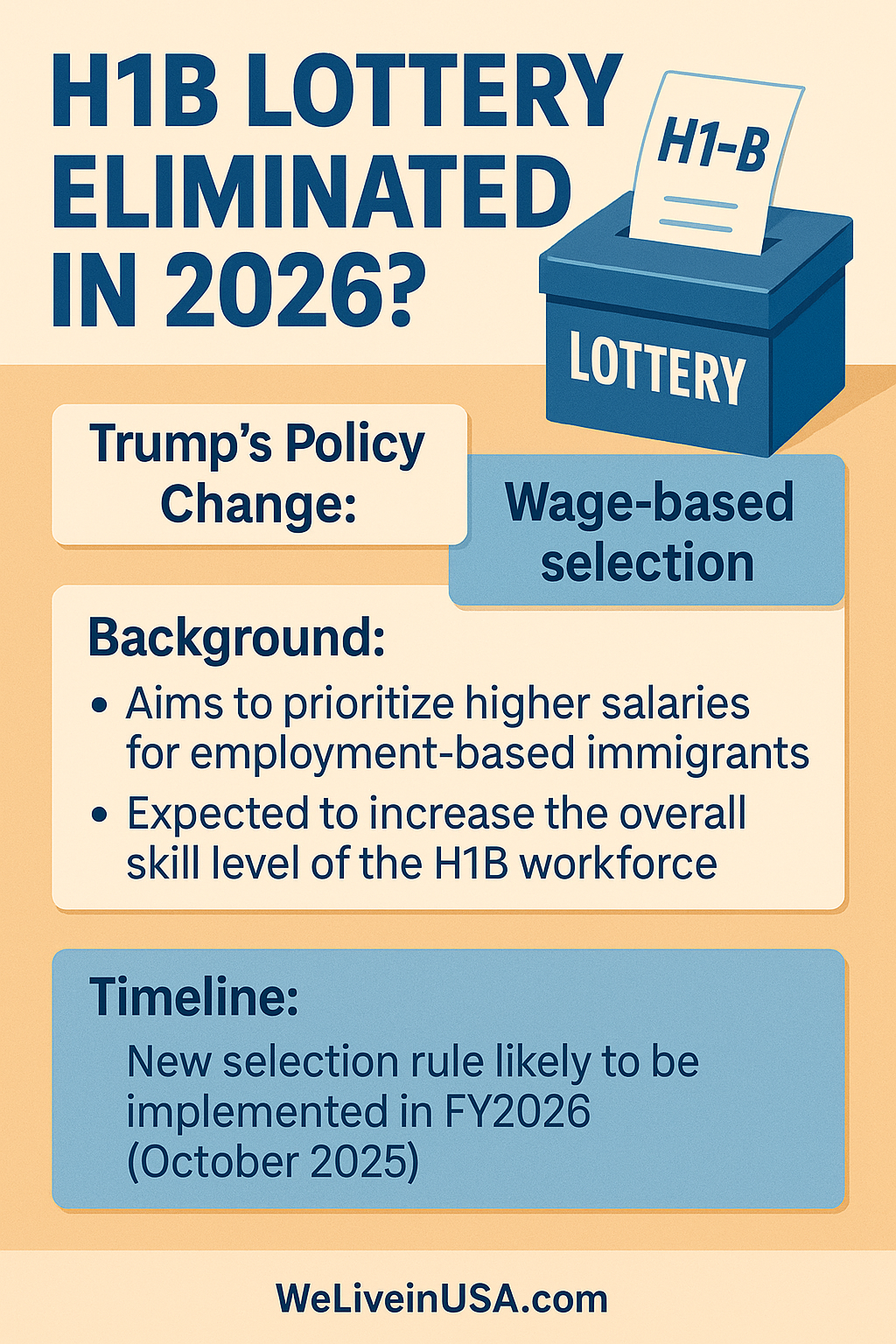
Planning to apply for an H-1B? Have you noticed? U.S. media and immigration circles are buzzing: the H-1B lottery may be scrapped in 2026! According to a draft immigration policy released by the Trump camp, they plan to change the current random lottery system (Lottery System) to a wage-based ranking system (Wage-Based Selection). What exactly is going on? And how will it affect international talent like you and me who want to stay in the U.S.?
📌 How the current H-1B lottery works
Each year there are 85,000 H-1B slots (20,000 of them reserved for people with a U.S. master’s degree or higher), and they are drawn at random from a huge pool of applicants. However much or little you earn, as long as your company registers you, you have a chance of being selected.
⚠️ Trump’s new proposal: “higher pay goes first”
✔️ Key points of the policy:
-
Scrap the random lottery and instead rank by salary to decide who gets an H-1B
-
Pay will be measured against the DOL (U.S. Department of Labor) wage levels (Wage Level 1~4)
-
The higher your salary and Wage Level, the better your odds of getting an H-1B
-
“Low-paid entry-level positions” will find it harder to get a slot (for example, international students starting their first job)
💬 The reasoning behind it:
The Trump administration believes this will:
-
Reduce H-1B abuse (especially outsourcing firms undercutting wages)
-
Protect the U.S. labor market
-
Attract highly skilled, highly paid top talent
📅 Timeline: when would it take effect?
For now this is still a draft policy, but if Trump wins the 2024 election again, the earliest it could happen is announced in 2025 and in effect in 2026.
U.S. Citizenship and Immigration Services (USCIS) also proposed a similar reform in 2021, but it never took effect because of policy disputes and lawsuits.
🤯 What does this mean for international students?
-
New graduates on OPT with modest salaries will be hit hardest
-
If you’re in a STEM field and qualify for the 24-month OPT extension, that period becomes the key window to “raise your pay”
-
Industries with traditionally lower starting pay (such as design, the humanities and education) will find it harder to stay
-
The strategy for staying to work in the U.S. shifts from “win the lottery and you’re in” to “is your salary high enough?”
🧠 How to respond to this change
✅ Prepare and plan early:
-
Find a position that offers a higher salary (for example, moving into tech or finance)
-
Improve your skills and salary negotiation
-
Consider alternatives such as the O-1 (extraordinary ability visa) or L-1 (intracompany transfer)
-
Make good use of the STEM OPT extension and enter the lottery after you’ve secured a higher starting salary
-
Talk seriously with your company’s HR about raising your Wage Level (Level 1 → Level 2)
🔗 Recommended further reading:
-
What is the H-1B? The application process and eligibility explained
-
Can’t find a job on OPT? 3 lesser-known ways to turn things around
-
How to negotiate a better salary: workplace survival skills for newcomers
✅ Final thoughts
This H-1B reform is bound to redefine who gets to stay.
The future won’t come down to luck, but to “ability” and “salary.”
For international students like us, now is the best time to rethink your career strategy.